
The T-Spine Advantage: Transform Your Game with Better Thoracic Mobility
Introduction
Ever wonder why some people can hit a golf ball really far, even though they don't look very strong or flexible? Or why sometimes your golf swing feels more like a wrestling match than a smooth motion?The answer might not be right in front of your face, but in your back. Specifically, a part of your back called the thoracic spine.
What and Where is the Thoracic Spine?
Imagine your back is like a big, tall building. This building has five floors. The thoracic spine is like the middle floors of this building. It's located in your upper back, right between your neck and your lower back. If you touch the part of your back that's opposite your chest, that's where your thoracic spine is.
We call the thoracic spine the "T-Spine" for short. It's like a nickname. Just like how some people call their best friend forever their "BFF." It's quicker and easier to say.
The Importance of Thoracic Mobility in Golf
Imagine your golf swing is like a machine. If one part of the machine isn't working right, the whole thing can break down. In this case, if your T-Spine isn't rotating properly, other parts of your body work harder to make up for it. This can mess up your swing and even cause injuries.
Common Issues and Impact on your Swing
A lot of golfers don't have enough rotation in their T-Spine without even realizing it. It’s a very common swing flaw we see all the time. Lack of T-Spine rotation means the arms have to compensate to move the club to the top of the backswing. That’s a sure-fire equation to make shots weaker and less accurate. Why? An “armsy” swing will surely lift your body up and out of good golf posture, bring the club off plane, and wreak all sorts of havoc with consistency.
Improving Thoracic Mobility
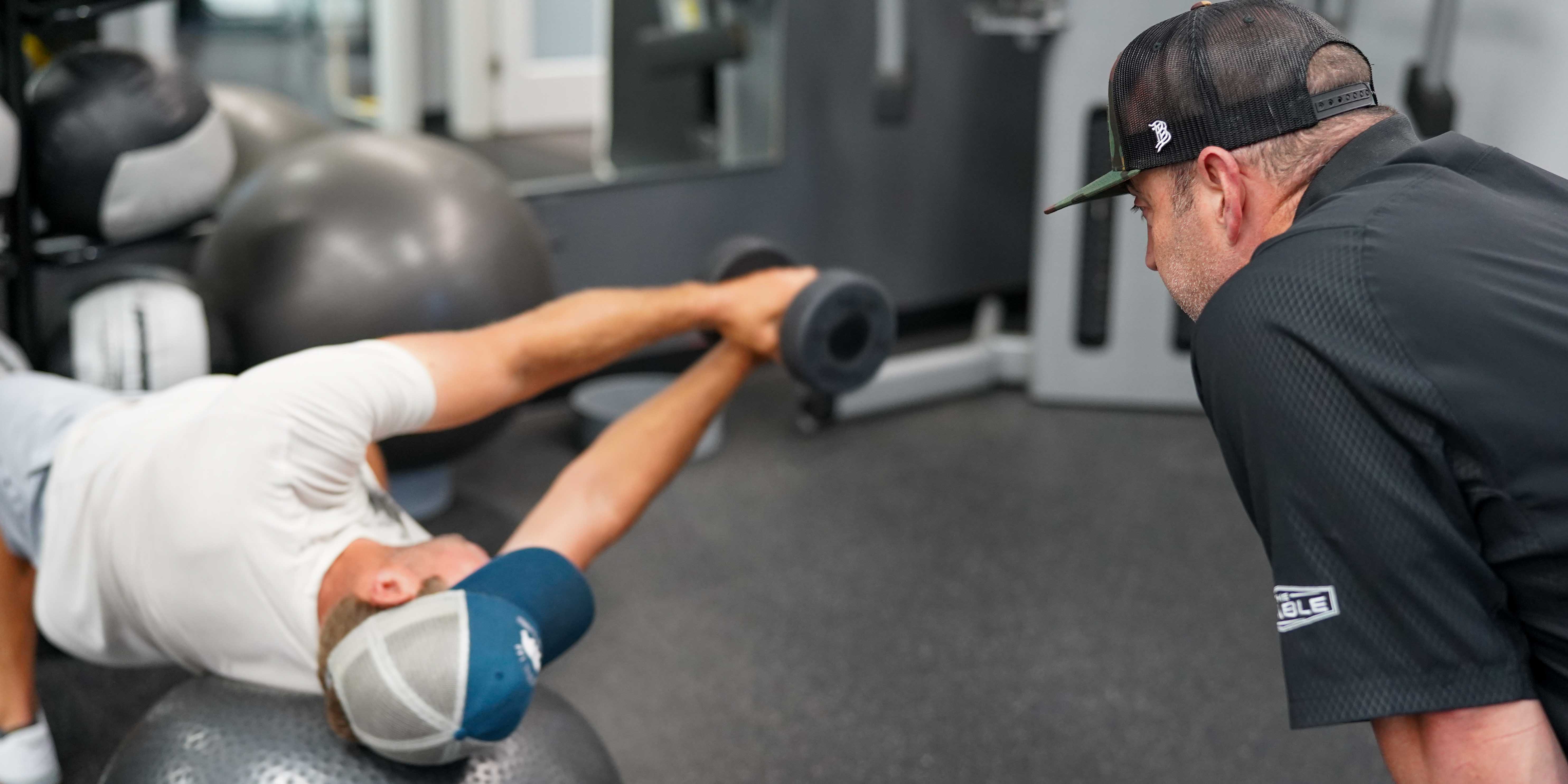
You don't need to be a gymnast to improve your T-Spine mobility. In June's Big 3 (a monthly feature in the new Golf Fitness by Hit It Great app) Coach K-Wayne Tullier highlighted three great T-spine rotation exercises. Here’s one you can do right now with a golf club or alignment stick:
Standing T-Spine Rotation w/ Coach K-Wayne
Stand with feet shoulder-width apart.
Place an alignment stick or golf club across chest. Cross hands to hold it against your shoulders.
Rotate upper body to the right as far as you canwithout turning your hips.
Once you start to feel your hips move, stop there.
Return to starting position.
Complete 10 rotations to the right followed by 10 rotations to the left to complete the set.
Remember, these exercises are about making your body move better, so you can swing more freely and powerfully.
Key Takeaways
The part of your back called the thoracic spine, or T-Spine, is really important for your golf swing.
If your T-Spine doesn't move enough, it can mess up your swing and even cause injuries.
Doing exercises specifically designed to isolate and improve rotation can help your T-Spine move better.
Conclusion
Helping your T-Spine move better isn't just about playing better golf. It's about moving better in your everyday life, too. Move better. Feel better. Play Better. In that order.
Note: To see the full Big 3 for Thoracic Mobility from Coach K-Wayne, plus our entire golf fitness workout library, check out our "Golf Fitness by Hit It Great" app!